Intellectual Property & Privacy Risks of AI in India
An Analysis of Intellectual property, intermediary liability, and privacy risks for Indian companies utilizing AI-driven platforms, and how these risks align with the requirements under the Indian Copyright Act, Information Technology Act, and the Digital Personal Data Protection Act (DPDP) 2023?
Introduction
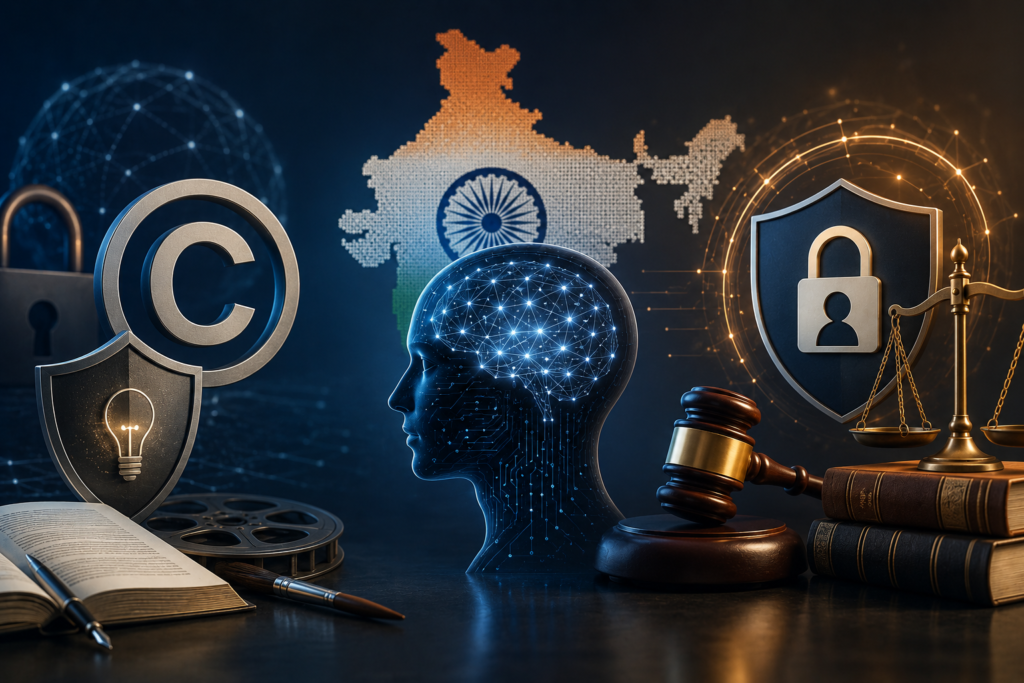
Artificial intelligence (AI) is completely reshaping the manner in which industries across the world automate tasks, improving decision-making, collecting information However, as it goes without saying the adaption of AI across various industries brings specific challenges, the companies in India that utilizes AI that deals with Intellectual properties do have the liability of an intermidiary. The use of AI-powered platforms introduces several legal risks related to intellectual property (IP), intermediary liability, and privacy. These risks are regulated by important legislative frameworks in India, such as the Indian Copyright Act, the Information Technology Act, 2000 (IT Act), and the Digital Personal Data Protection Act, 2023 (DPDP Act).
A . Threats/Breach of Intellectual Property Rights
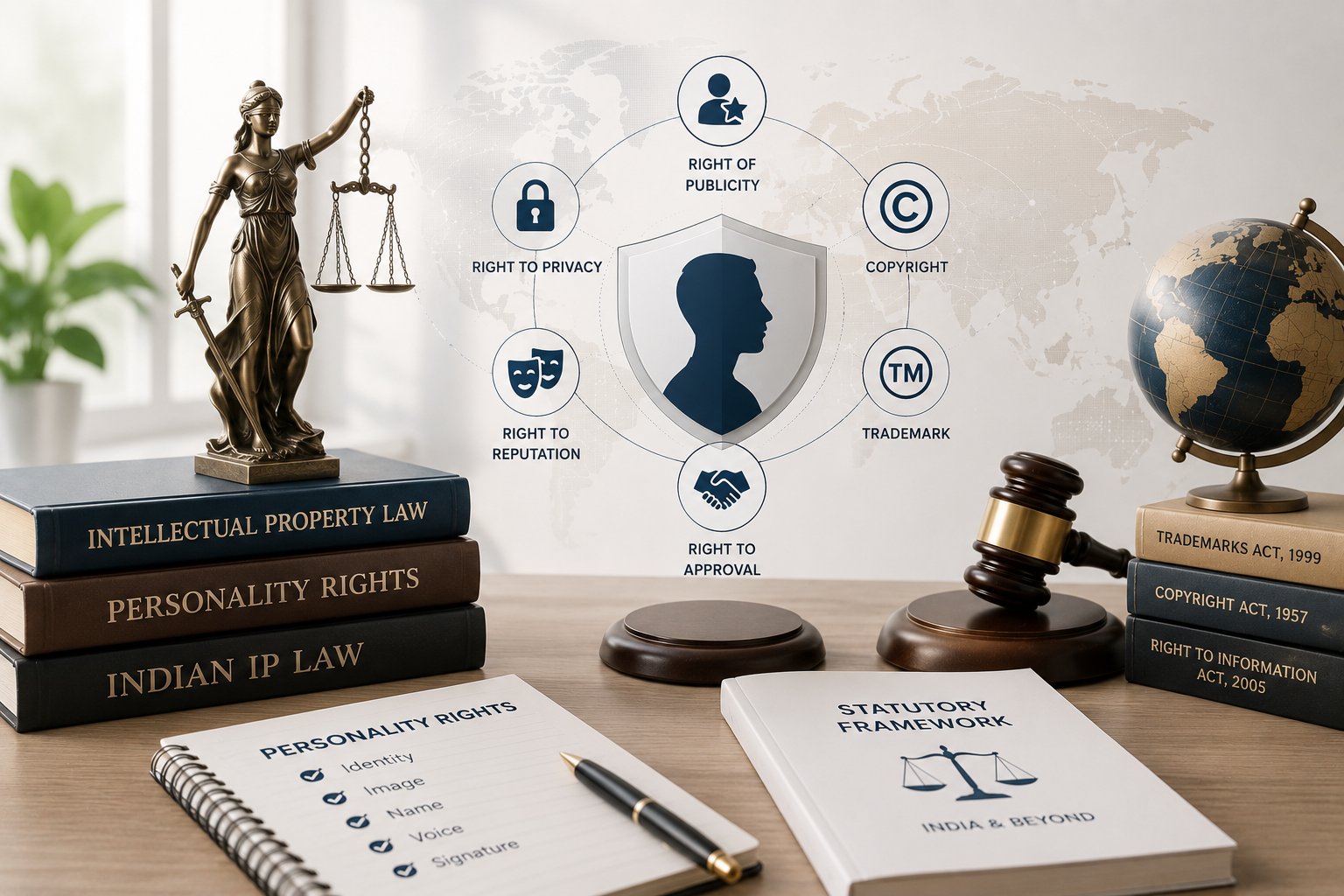
The AI driven – Industries, which process large data, pose a significant threat to IP rights especially privacy and commercial exploitation being primarily targeted.
1. Copyright Infringement in AI Training: Generally, model-based training processes are rather data-intensive, depending on the nature of the generative AI. Thus, if there is copyrighted material in some of the training datasets without proper licenses or permissions, copyright infringement would most probably ensue, since it follows from Section 51 of the Copyright Act in respect of the conditions for determining whether copyright has been infringed. For example, AI models undoubtedly violate authors’ rights when such models collect online content or use copyrighted images, texts, or music unless their application would qualify as fair use.
2. Ownership of AI-Generated Works: One major issue pertains to who owns works created by AI. Specifically, Copyright Act does not point out precisely who owns AI-generated contents; hence, uncertainty is attached legally. As emphasized by Section 2(c), it is the authorship that is central to copyright ownership, but with AI-generated works, this is already complicated since no human author can identify the work. Therefore, the question arises whether the copyright of an AI developer, or that of the user of the platform, or that of the owner of the data needs to be considered, as Indian copyright law calls for human authorship, which creates problems for companies relying on AI to create content.
3. Derivative Works and Fair Use: AI systems can create derivative works from existing copyrighted materials. According to Section 14 of the Copyright Act, a derivative work consists of or from a prior established copyrighted work, which therefore establishes that organizations making use of AI must obtain the necessary permits from the original authors. However, Chapter 52 does outline some limits under the guise of fair use under which copyrighted works might be used in pursuit of purposes such as criticism, comment, or research. It is highly contentious whether use of copyrighted material for training AI models falls within fair use and probably needs judicial clarification.
B. Intermediary Liabilities
AI platforms are commonly intermediaries because they typically display user-generated content or otherwise take active roles in algorithm-driven decision-making. All intermediaries fall within the scope of the Information Technology Act, 2000, specifically Section 79 thereof, which affords interim protective immunity to them as “safe harbors”.
1. Safe Harbor Provisions: Section 79 of the Information Technology Act introduces a freedom from legal liability for intermediaries’ content generated by third parties provided they abide by a few due diligence standards. The intermediaries, as per 2021 Information Technology (Intermediary Guidelines and Digital Media Ethics Code) Rules, are required to remove or disable access to-content when they are notified thereof. Then such user generated content hosting AI driven services which are quite similar to the social media sites too come under the purview of such regulations. If they do not examine the content that is deemed offensive or infringes, these operators are liable to be charged under the IT Act as well as any other law, be it defamation, obscenity or copyright infringement.
2. Content Moderation and Algorithmic Accountability: Artificial intelligence platforms that combine artificial intelligence algorithms with content moderation obligations are bound by the intermediary guidelines under the IT Act. Safe harbor protections enjoyed by these platforms if algorithms incidentally promote unacceptable or illegal content are a concern. They will also provide information about following the content moderation policies under Rule 4 of the Intermediary Guidelines. Should such activities also involve a violation of privacy rights, Section 66E specifically forbids the recording, or distribution, of any photograph of a person’s private areas without consent.
3.AI-generated content moderation: The case of intermediary liability would be increased if it relies on artificial intelligence, which generates its content independently. Since the minute an AI-based platform creates or modifies the content, then it cannot be considered a neutral intermediary, thereby evoking liability related to content creation or/and distribution.
C. Privacy and Data Protection Risks.
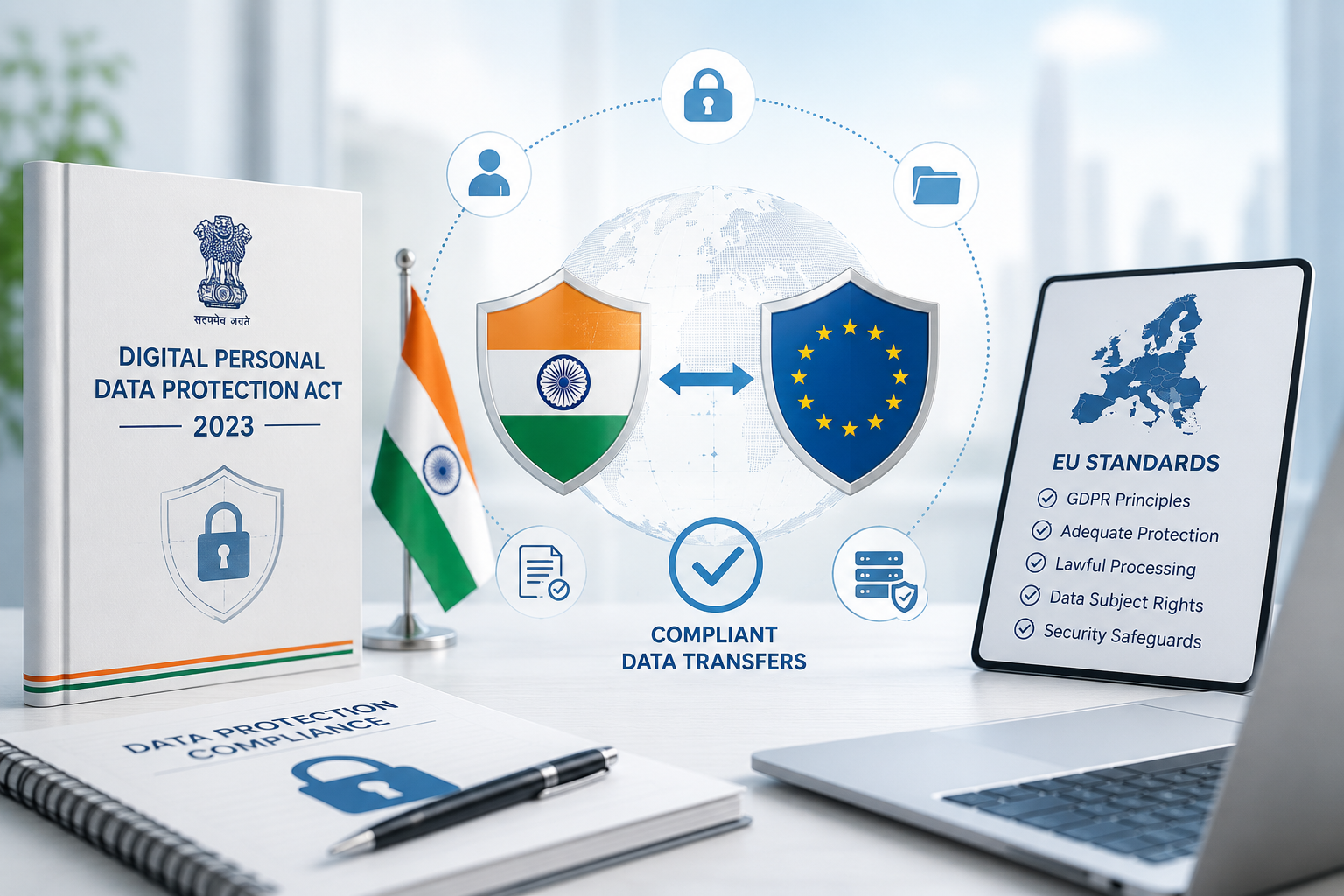
The DPDP Act, 2023 has contain some severe measures about the collection, processing as well as the protection of data. The use of large amount of PII for analytical purposes through digital, AI based platforms will be compliance under the DPDP Act which inherently poses as a challenge to data privacy.
1. Data Management and Informed Consent: Section 4 of the DPDP Act laid down that where an organization proposes to process personal data, it shall, in particular, obtain clear and specific consent from that person. Indeed, it has in black and white in Section 7 that such consent shall be informed. Regarding processing of personal data, AI data processing systems shall as a result guarantee collection of actual consent at the time of data collection and subsequent consent for subsequent activities by the AI. According to section 9, the reasons for processing shall be specified, and data shall not be processed in ways incompatible with the purposes for which it was collected:.
2. Cross-Border Data Transfers: An AI platform of a multinational firm entail moving data across borders on a daily basis. Depending on the country, in which such data is to be received/transferred, Section 14 of the DPDP Act has placed some restrictions on transfer of data while an enterprise has to ensure that data protection in such a country is adequate. This poses a great challenge to the AI platforms operating across the globe by employing worldwide datasets or cloud services; they will have to put mechanisms for data localization and data transfer also.
3. Automated decision-making and profiling: whereas, some of the components of AI-based systems, for instance, automated decision systems, profiling systems, should prompt certain individual rights which the DPDP Act relates to. According to section 12 of the bill if the outcome of an automated decision is the kind of decision that would be notified then the AI–computer system shall give reasons for the decision and inform the subject that he has a right to appeal for a review of the decision. When system or an algorithm that is partly run by a robot determines a person’s rights and freedoms, corporations should incorporate checks and a way to challenge.
4. Data Security and Breach Notification: The DPDP Act requires an organization to implement suitable technical and organizational measures relating to the security of personal data. Section 23 of the DPDP Act requires that any person is mandated to report to the Data Protection Board once they have realised that personal data breach has occurred and, section 22 imposes a general obligation on the data fiduciaries in the protection of personal data. Because artificial intelligence platforms are highly susceptible to cyber attacks having relied in large critical datasets, they should design proper data security systems in an attempt to avoid breaches for compliance under DPDP Act.
Conclusion
The challenges of law that are associated with the AI based platform in India is matters that are surrounded by Intellectual property concerns, intermediary liability, and privacy are apparent. While the Indian Copyright Act do not fully equip the resolution of potential AI-driven IP rights infringement disputes or accommodate the prerequisite of potential IP rights violation, It is not far-fetched to argue that the Information Technology Act aligns the liability of an intermediary to duties of the AI platforms to adhere to norms on content moderation and algorithms. Stringent measures continue regarding consent, data localization, and the use of new technologies under the proposed Digital Personal Data Protection Bill 2023. Platform AI-centric companies should develop policy based compliance initiatives in a manner that allows the organizations to effectively respond to legal requirements while preventing legal risks at the same time. A strong penal system will instill significant compliance activities intended to avoid legal risks, fines imposed by the regulatory authority, and the resulting damage to reputation.
References
Indian Copyright Act 1957, s 2(c), s 14, s 51, s 52.
Information Technology Act 2000, s 66E, s 79.
Information Technology (Intermediary Guidelines and Digital Media Ethics Code) Rules 2021, r 4.
Digital Personal Data Protection Act 2023, s 7, s 9, s 12, s 14, s 22, s 23.Indian Copyright Act, 1957, Sections 2(c), 14, 51, 52